(Click here for personal website)
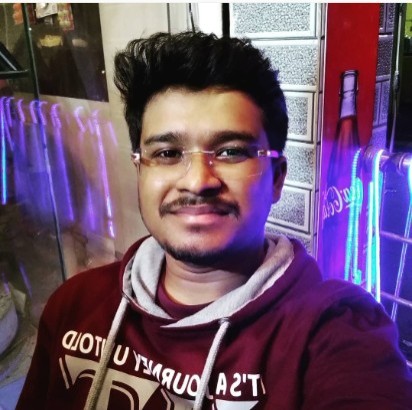
Dr. Manoranjan Dutta is an Assistant Professor in the Department of Physics at North Lakhimpur University, Assam, India. He obtained his Ph.D. in Physics from the Indian Institute of Technology (IIT) Hyderabad in 2022, where his research focused on the phenomenology of self-interacting dark matter. He was the University Gold Medallist in M.Sc. Physics from Tezpur University in 2017 and the Best Graduate (Science) of Dibrugarh University in 2015. He also secured the first rank in the State Eligibility Test (SLET) for Physical Sciences in the North-East region and was a recipient of the prestigious DST-INSPIRE Fellowship for PhD, as well as UGC merit scholarship for University Rank Holders.
Dr. Dutta's research lies at the interface of particle physics, cosmology, and astrophysics, with particular emphasis on dark matter, neutrino mass generation, baryogenesis, and cosmological evolution. He has authored more than 15 research publications, including papers in leading journals such as Physical Review D, Journal of Cosmology and Astroparticle Physics (JCAP), Nuclear Physics B, and Physics Letters B. His recent work explores the common origin of dark matter and the matter-antimatter asymmetry of the Universe through novel leptogenesis scenarios.
He has received the ANRF International Travel Support (ITS) Award, the Best Oral Presentation Award at NCETP-2021, and actively contributes to the scientific community through conference organization, editorial and review activities. He has been serving as the Organizing Secretary of the SPARK conference series since its foundation, and is an editor of conference proceedings of SPARK published by IOP Publishing and Springer Nature. Additionally, he has been serving as a member of Board of Studies and Departmental Research Committee of the Department of Physics, North Lakhimpur University.
Research Interests
Theoretical Particle Physics and Phenoemenology: Physics Beyond the Standard Model, Dark Matter, Neutrino mass, Higgs Physics.
Early and Late Universe Cosmology.
Anomalies of the Stanadard Model of Cosmology.
(Click here for Research Works)
Specialized Courses
Quantum Mechanics, Mathematical Physics.
Quantum Field Theory, Particle Physics.
General theory of Relativity, Cosmology.
Publications
Click here to visit iNSPIRE-hep
Click here to visit Google Scholar
Click here to visit Researchgate
(* indicates the alphabetical ordering of author's surnames, followed in certain Journals in HEP community)
A. SCI Journal Publications
- M. Dutta and N. Narendra, A Common Origin of Asymmetric Self-interacting Dark Matter and Dirac Leptogenesis, Physical Review D 112 (2025) 115043, DOI: https://doi.org/10.1103/PhysRevD.112.115043 , Journal Impact Factor: 5.4, Journal ISSN: 2470-0029 (online), 2470-0010 (print) (Scopus indexed), arXiv:2506.22388 [hep-ph].
- M. Dutta and S. Mahapatra, Mini-review on Self-interacting Dark Matter, The European Physical Journal Special Topics 233 (2024) 1–16, DOI: https://doi.org/10.1140/epjs/s11734-024-01309-z , Journal Impact Factor: 2.4, Journal ISSN: 1951-6401 (print), 1951-6355 (online) (Scopus indexed), arXiv:2404.17780 [hep-ph].
- M. Dutta, N. Narendra, N. Sahu and S. Shil, Asymmetric Self-interacting Dark Matter via Dirac Leptogenesis, Physical Review D 106 (2022) 095017, DOI: https://doi.org/10.1103/PhysRevD.106.095017 , Journal Impact Factor: 5.4, Journal ISSN: 2470-0029 (online), 2470-0010 (print) (Scopus indexed), arXiv:hep-ph/2202.04704.
- D. Borah, M. Dutta*, S. Mahapatra and N. Sahu, Boosted Self-interacting Dark Matter and XENON1T Excess, Nuclear Physics B 979 (2022) 115787, DOI: https://doi.org/10.1016/j.nuclphysb.2022.115787, Journal Impact Factor: 3.0, Journal ISSN: 0550-3213 (Scopus indexed), arXiv:hep-ph/2107.13176.
- D. Borah, M. Dutta*, S. Mahapatra and N. Sahu, Lepton Anomalous Magnetic Moment with Singlet-Doublet Fermion Dark Matter in a Scotogenic U(1)Lμ−Lτ Model, Physical Review D 105(2022) 015029, DOI: https://doi.org/10.1103/PhysRevD.105.015029, Journal Impact Factor: 5.4, Journal ISSN: 2470-0029 (online), 2470-0010 (print) (Scopus indexed), arXiv:hep-ph/2109.02699.
- D. Borah, M. Dutta*, S. Mahapatra and N. Sahu, Singlet-Doublet Self-interacting Dark Matter and Radiative Neutrino Mass, Physical Review D 105 (2022) 075019, DOI: https://doi.org/10.1103/PhysRevD.105.075019, Journal Impact Factor: 5.4, Journal ISSN: 2470-0029 (online), 2470-0010 (print) (Scopus indexed), arXiv:hep-ph/2112.06847.
- D. Borah, M. Dutta*, S. Mahapatra and N. Sahu, Self-interacting Dark Matter via Right Handed Neutrino Portal, Physical Review D 105 (2022) 015004, DOI: https://doi.org/10.1103/PhysRevD.105.015004, Journal Impact Factor: 5.4, Journal ISSN: 2470-0029 (online), 2470-0010 (print) (Scopus indexed), arXiv:hep-ph/2110.00021.
- D. Borah, M. Dutta*, S. Mahapatra and N. Sahu, Muon (g−2) and XENON1T Excess with Boosted Dark Matter in Lμ−Lτ Model, Physics Letters B 820 (2021) 136577, DOI: https://doi.org/10.1016/j.physletb.2021.136577 , Journal Impact Factor: 4.4, Journal ISSN: 0370-2693 (Scopus indexed), arXiv:2104.05656 [hep-ph].
- M. Dutta, S. Mahapatra, D. Borah and N. Sahu, Self-interacting Inelastic Dark Matter in the Light of XENON1T Excess, Physical Review D 103 (2021) 095018, DOI: https://doi.org/10.1103/PhysRevD.103.095018, Journal Impact Factor: 5.4, Journal ISSN: 2470-0029 (online), 2470-0010 (print) (Scopus indexed), arXiv:hep-ph/2101.06472.
- M. Dutta, S. Bhattacharya, P. Ghosh and N. Sahu, Singlet-Doublet Majorana Dark Matter and Neutrino Mass in a Minimal Type-I Seesaw Scenario, Journal of Cosmology and Astroparticle Physics (JCAP) 03 (2021) 008, DOI: https://doi.org/10.1088/1475-7516/2021/03/008, Journal Impact Factor: 7.3, Journal ISSN: 1475-7516 (Scopus indexed), arXiv:hep-ph/2009.00885.
B. Conference Proceedings/Book Chapters
-
- M. Dutta, Inelastic Self-interacting Dark Matter in Non-standard Cosmology, Springer Proceedings in Physics361 (2025) 57–71, Springer Nature, ISBN: 978-981-96-7060-4.
- M. Dutta, N. Narendra, N. Sahu and S. Shil, Dirac Leptogenesis Assisted Asymmetric Self-interacting Dark Matter, Springer Proceedings in Physics 304 (2025) 1086–1088, Springer Nature, ISBN: 978-981-97-8289-5.
- M. Dutta and N. Narendra, Asymmetric Self-interacting Dark Matter and Neutrino Mass via Dirac Leptogenesis, EPJ Web of Conferences 312 (2024) 05003, DOI: https://doi.org/10.1051/epjconf/202431205003 , ISSN: 2100-014X (Scopus indexed).
- M. Dutta, Self-interacting Dark Matter in a Non-Standard Universe, Journal of Physics: Conference Series 2957(2025) 012003, DOI: https://doi.org/10.1088/1742-6596/2957/1/012003 , ISSN: 1742-6588 (Scopus indexed).
- M. Dutta, S. Bhattacharya, P. Ghosh and N. Sahu, Majorana Dark Matter and Neutrino Mass in a Singlet-Doublet Extension of the Standard Model, Proceedings of the XXIV DAE-BRNS High Energy Physics Symposium, Springer Proceedings in Physics 277 (2022) 685–689, DOI: https://doi.org/10.1007/978-981-19-2354-8_124 , Springer Nature, ISBN: 978-981-19-2353-1, arXiv:hep-ph/2106.13857.
Conferences
Invited Talks
- Self-interacting Dark Matter (SIDM), invited talk presented at Frontiers in Particle Physics (International Conference), 10–12 March 2023, Centre for High Energy Physics, Indian Institute of Science (IISc), Bengaluru, India.
- Dark Matter just from Newton's Law, inaugural lecture of the Physics Lecture Series, 30 November 2022, Department of Physics, North Lakhimpur College (Autonomous), Assam, India.
- Inelastic Self-interacting Dark Matter in the Light of XENON1T Excess, invited seminar at the Journal Club, Institute of Physics (IoP), Bhubaneswar, India, 10 March 2022.
Oral Presentations
- A Common Origin of Asymmetric Self-interacting Dark Matter and Dirac Leptogenesis, talk presented at the 3rd International (Online) Conference on Universe, 4–6 March 2026.
- Asymmetric Self-interacting Dark Matter and Light Neutrino Mass from Dirac Leptogenesis, XIV Biennial Conference of Physics Academy of the North-East (PANE 2024), 12–14 November 2024, Tezpur University, India.
- Asymmetric Self-interacting Dark Matter via Dirac Leptogenesis, 22nd International Conference on Flavor Physics and CP Violation (FPCP 2024), 27–31 May 2024, Chulalongkorn University, Bangkok, Thailand.
- Asymmetric Self-interacting Dark Matter, International Conference on Frontiers in Pure and Applied Physics (ICFPAP 2024), 29 February–2 March 2024, University of Science and Technology Meghalaya, India.
- Inelastic Self-interacting Dark Matter in Non-Standard Cosmology, International Conference on Future Prospects in Neutrino and Astroparticle Physics (ICFPNAP 2024), 23–24 January 2024, Assam Don Bosco University, India.
- Self-interacting Dark Matter in Non-Standard Cosmology, Symposium on Physics: Advances in Research and Knowledge (SPARK 2023), 14 October 2023, North Lakhimpur University, India.
- Asymmetric Self-interacting Dark Matter via Dirac Leptogenesis, Cosmology@CCSP1: An Inaugural Conference on Current Status of Cosmology, 17–19 October 2022, SGT University, Gurugram, India.
- Self-interacting Dark Matter via Right Handed Neutrino Portal, Anomalies 2021 (International Conference), 10–12 November 2021, IIT Hyderabad, India.
- Self-interacting Dark Matter via Right Handed Neutrino Portal, Brookhaven Forum 2021: Opening New Windows to the Universe (BF2021), 3–5 November 2021, Brookhaven National Laboratory, USA.
- 10. Self-interacting Inelastic Dark Matter in the Light of XENON1T Excess, 26th International Symposium on Particle Physics, String Theory and Cosmology (PASCOS 2021), 14–18 June 2021, Daejeon, Republic of Korea.
- Self-interacting Inelastic Dark Matter in the Light of XENON1T Excess, National Conference on Emerging Trends in Physics (NCETP 2021), 16 June 2021, Tezpur University, India.
- Self-interacting Inelastic Dark Matter in the Light of XENON1T Excess, 14th International Conference on Interconnections between Particle Physics and Cosmology (PPC 2021), 24–26 May 2021, University of Pittsburgh, USA.
- Self-interacting Dark Matter via Right Handed Neutrino Portal, XII Biennial Conference of Physics Academy of North-East (PANE 2021), 15–17 December 2021, Tripura University, India.
- Self-interacting Dark Matter via Right Handed Neutrino Portal, Fundamental and Applied Sciences (FAS 2021), 20–21 October 2021, SVNIT Surat, India.
- Singlet-Doublet Majorana Dark Matter and Neutrino Mass in a Minimal Type-I Seesaw Scenario, XXIV DAE-BRNS Symposium on High Energy Physics, 14–18 December 2020, NISER Bhubaneswar, India.
- Singlet-Doublet Majorana Dark Matter and Neutrino Mass in a Minimal Type-I Seesaw Scenario, Anomalies 2020 (International Conference), 11–13 September 2020, IIT Hyderabad, India.
Poster Presentations
- Self-interacting Inelastic Dark Matter in the Light of XENON1T Excess, poster presented at the 28th International Workshop on Weak Interactions and Neutrinos (WIN 2021), 7–12 June 2021, University of Minnesota, USA.
- Singlet-Doublet Majorana Dark Matter and Neutrino Mass in a Type-I Seesaw Scenario, poster presented at the INVISIBLES'21 Virtual Workshop: Neutrinos, Dark Matter, Axions and other Elusives, 31 May–4 June 2021, Horizon 2020 Marie Curie ITN Network.
Achievements
- International Travel Support (ITS) by ANRF (SERB), Govt. of India, 2024.
- DST-INSPIRE Fellowship for PhD by the Department of Science and Technology, Government of India, 2017-18.
- University Gold Medalist with 1st Class 1st rank in M.Sc.(Physics), Tezpur University, 2017.
- Best Graduate of Science with 1st Class 1st rank in B.Sc.(Physics), Dibrugarh University, 2015.
- Post Graduate Merit Scholarship for University Rank Holders by University Grant Commission(UGC), India, 2015-17.
- 1st Rank in State Level Eligibility Test (SLET) for Lectureship in physical sciences, North-East Region,India, 2017.
- Best Oral Presentation Award at the National Conference on the Emerging Trends in Physics (NCETP 2021), Dept. of Physics, Tezpur University, India, 16th June, 2021.
- Graduate Aptitude Test for Engineering (GATE)-Physics by MHRD, 2018.
- Hemanta Kumar Sarma Memorial award for securing the highest marks in the subject ‘Assamese’ (MIL) in HS Final Examination ( Cotton college) under AHSEC, 2011.
- Anundoram Borooah memorial award for securing Distinction in HSLC Examination under SEBA, 2009.
Research
 Research Areas: High-Energy Physics and Cosmology
Broad Research Themes
- Dark Matter and Hidden-Sector Physics
- Neutrino Mass Models and Flavor Physics
- Baryogenesis and Leptogenesis
- Self-Interacting and Asymmetric Dark Matter
- Non-Standard Cosmology and Early-Universe Dynamics
- Cosmological Signatures of Physics Beyond the Standard Model
About our research
Our research lies at the interface of particle physics, cosmology, and astrophysics, aiming to uncover the fundamental laws governing the Universe. We investigate some of the most profound open questions in modern physics:
Dark Matter
A wealth of astrophysical and cosmological observations—from galaxy rotation curves and gravitational lensing to the cosmic microwave background (CMB)—indicate that nearly 85% of the matter in the Universe is dark. Yet, the particle identity of dark matter remains unknown. We explore theories beyond the Standard Model (BSM), focusing particularly on self-interacting, asymmetric, and non-thermal dark matter scenarios, which can simultaneously address both cosmological and particle physics puzzles.
Neutrino Mass and Nature
The Standard Model predicts massless neutrinos, but neutrino oscillation experiments have conclusively shown that neutrinos possess tiny, non-zero masses. An equally intriguing question is whether neutrinos are Dirac or Majorana particles. Our work investigates various neutrino mass generation mechanisms, including seesaw frameworks and radiative models, and their possible connections to dark matter and early-Universe physics.
Matter-Antimatter Asymmetry
The observable Universe is overwhelmingly dominated by matter, despite the expectation that the Big Bang should have produced equal amounts of matter and antimatter. Explaining this imbalance remains one of the central challenges in fundamental physics. We study mechanisms of baryogenesis and leptogenesis, particularly scenarios where the origins of matter asymmetry are intimately connected with dark matter and neutrino physics.
Cosmology and the Early Universe
The standard cosmological model, ΛCDM, successfully explains the large-scale structure of the Universe and the observed CMB anisotropies. However, high-resolution astrophysical observations reveal several small-scale tensions, including the cusp-core problem, missing satellite problem, and too-big-to-fail problem. Our research explores how self-interacting dark matter, non-standard cosmological histories, and hidden-sector dynamics can provide viable solutions to these anomalies. We also investigate the thermal history of the early Universe and its implications for dark matter production, neutrino physics, and cosmic evolution.
Our ultimate goal is to understand how the microscopic laws of particle physics shape the macroscopic evolution of the Universe and to uncover the new physics that lies beyond the Standard Model.
Reseach Group
Current PhD Student: Mr. Biswajit Deka
M.Sc. Students: Mr. Trinayan Saikia, Ms. Nishcita Kataky, Mr. Lohit Chetry
Teachings
Undergraduate Courses:
- Mathematical Physics I
- Mathematical Physics II
- Quantum Mechanics I
- Quantum Mechanics II
Postgraduate Courses:
- Quantum Mechanics
- Advanced Quantum Mechanics
- Electromagnetic Theory
- Quantum Field Theory I
- Quantum Field Theory II
Click here for Lecture Notes (This will bring you to external website)